GLEANING

Gleaning is the act of collecting leftover crops from farmers’ fields after they have been commercially harvested or on fields where it is not economically profitable to harvest. In a modern context, this can include the collection of food from supermarkets at the end of the day that would otherwise be thrown away. Our project spends most of it’s time gleaning surplus produce from supermarkets and restaurants but when we get the opportunity, we glean vegetables from nearby farms.
Reducing food miles by sourcing local produce is an obvious benefit and by harvesting veg rather than letting it rot, we are using the energy / carbon put into the food rather than wasting it.
The Cornwall Gleaning Network regularly deliver vegetables that they have gleaned from many different farms in Cornwall. Thanks to them we have a regular supply of wonderful vegetables which are used in the meals that we cook up and at collections where anyone can come and collect them.
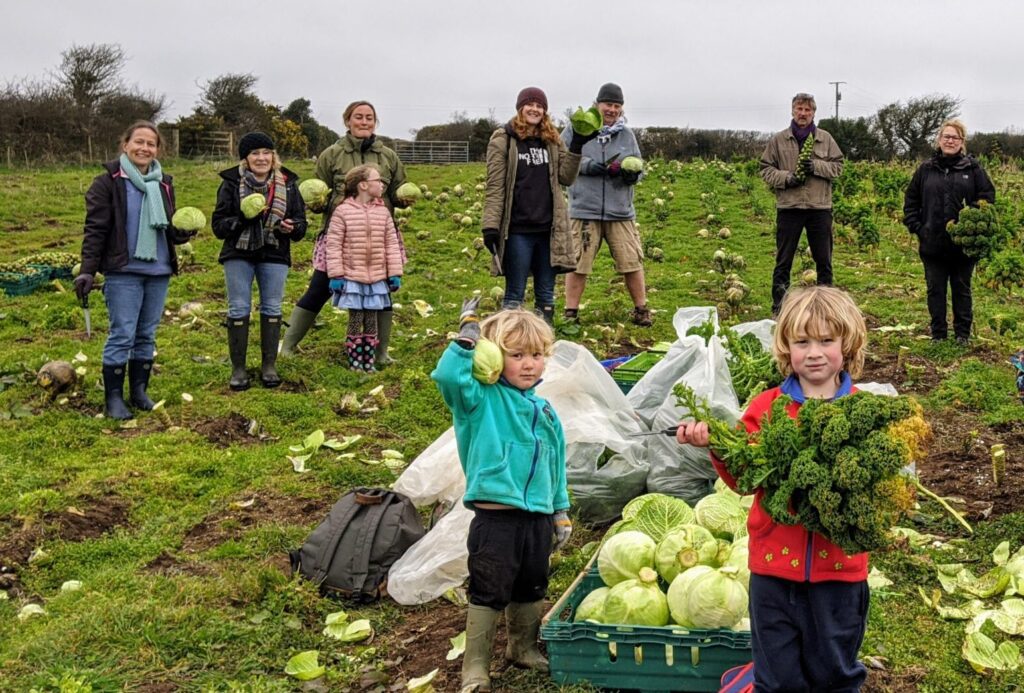
Gleaning gives volunteers an opportunity to engage with the food system hands-on by rescuing fresh, surplus fruit and veg from farms where it would otherwise be wasted, and get it to good causes bringing an age-old practice to avoid waste into the 21st century. It’s a win, win operation. Farmers reduce waste and people suffering with lack of fresh, healthy food get some. Gleaning is also a fun, sociable, rewarding and an outdoor workout.
CORNWALL GLEANING NETWORK - JOIN THEM

The Cornwall Gleaning Network is a growing network of local coordinators, amazing volunteer harvesters and drivers, who are salvaging tonnes of produce from farms and growers and distributing it to foodbanks, soup kitchens and other charities that feed those most in need.
Our local food banks are desperately trying to keep up with demand but are really struggling, especially for fresh produce.is supporting the incredible work already happening in this county to solve this key issue and that of food wasted on farms in the county. Cornish Gleaners plan to harvest surplus food or pick-up wonky produce and deliver this to food banks and community kitchens. In doing so they are bringing an age-old practice to avoid waste into the 21st century. Their vision is for a safe future where no one goes hungry and food waste no longer exists; in the meantime, wherever and whenever a farmer has produce they cannot sell or harvest, a well-trained local gleaning group can help ensure this food reaches the places where it is desperately needed.
Sign up HERE
FaceBook group HERE
Email: gleaningcornwall@gmail.com
Phone Holly on 07747 436791
“Gleaning is a wonderful way for us to supplement the food supplies that we share with the community and our volunteers really enjoy the chance to go out and pick fruit and veg on different farms. We’ve collected loads of apples from a garden where 100’s of apples would otherwise have simply rotted on the ground and collected bag loads of greens from a farm after the supermarkets had cropped. Besides giving this away at our foodshare collections it has also enabled us to have some wonderful foodshare events which brings people together in a lovely way. “ Elise – St Ives Community Foodshare
“A third of our food gets wasted, some of it at farm level. This isn’t just a waste of food but carbon! It’s not the farmers fault as contracts get changed, veg isn’t always perfect, occasionally there’s a glut and sometimes it makes no financial sense to collect every cauliflower if the size isn’t right when the pickers go in. We don’t just have food poverty but confirmed malnutrition, as families continue to struggle to both feed and keep warm.” Holly – Regenerative Food and Farming – Cornwall Gleaning Network
“Every year on farms across the country large quantities of vegetables and produce go to waste because they are not economic to harvest or because they are irregular shapes and sizes which shops don’t want. Most farmers like ourselves don’t like to see good food go to waste so are happy for people to glean. It would be brilliant if there was an easy way of putting farmers in touch with people and organisations who can make good use of this produce.” Phil, Trowan Farm